
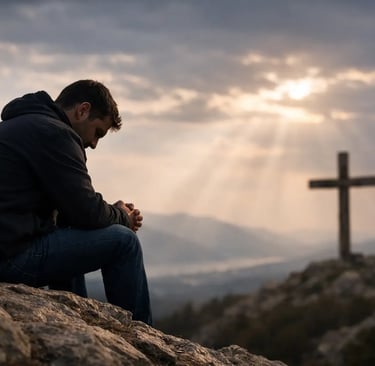
Some questions do not stay in your head. They sit in your chest at 2 a.m. They show up in hospital rooms, funeral homes, broken marriages, panic attacks, and prayers that seem to hit the ceiling. Why does God allow suffering is not a cold theology question. For most people, it is personal. It is asked with tears, anger, confusion, and sometimes silence.
And this is where shallow church answers do damage. If someone tells you suffering is always the result of your personal sin, that is false. If they tell you God is distant and uninvolved, that is false too. The Bible gives a harder answer, but it also gives a stronger one. God allows suffering in a fallen world for reasons bigger than we can fully see, yet He is not absent in it, careless about it, or defeated by it.
Why does God allow suffering in a broken world?
The first truth is simple, even if it is not easy. Suffering exists because sin entered the world. When humanity rebelled against God, everything was damaged - our hearts, our bodies, our relationships, our thinking, and even creation itself. That does not mean every pain you face is a direct punishment for some specific mistake. It means we live in a world that is no longer working as God originally made it.
This matters because many people aim their anger at the wrong target. They blame God for the chaos of a world that has been twisted by human rebellion. Scripture does not paint a picture of a world running as it should. It paints a world groaning under the weight of sin, death, injustice, disease, and decay. That is the world you and I actually live in.
Still, that answer only goes so far. If God is sovereign, why does He allow it to continue? Why not stop every tragedy before it happens? Why not interrupt every abuse, cancer diagnosis, betrayal, or disaster?
Because God is not only dealing with your immediate pain. He is carrying out a larger plan of justice, mercy, repentance, redemption, and final restoration. We want instant intervention. God is working toward ultimate victory. Those are not the same timeline.
God allows what He hates for what He loves
That sentence bothers people because it should. Suffering is not good in itself. Evil is evil. Death is an enemy. Oppression is wicked. Grief is real. The Bible never asks you to pretend pain is pleasant. Jesus Himself wept. He did not stand at Lazarus's tomb and call mourning a lack of faith.
But Scripture also shows that God can permit what He hates in order to accomplish what He loves. Joseph was betrayed by his brothers, sold, falsely accused, and imprisoned. None of that was good. Yet God used it to preserve many lives. Jesus was crucified in the greatest act of injustice in history, and through that evil God brought salvation to the world. Human sin was real. God's purpose was greater.
That does not turn suffering into something light or neat. It means pain is not proof that God has lost control. It means what looks meaningless to us may not be meaningless to Him.
There is a trade-off here that honest Christians should admit. A world with real choices, real consequences, real love, and real moral weight is not the same as a padded room where nothing harmful can ever happen. We often ask for freedom, then wonder why freedom creates collisions. God did not make robots. He made human beings accountable to Him. That accountability has brought terrible evil into the world.
Why does God allow suffering for His people?
This is where many believers get shaken. They can accept that bad things happen "out there," but they stumble when suffering lands in their own house. If God loves me, why this? If I prayed, why didn't He stop it? If I tried to obey, why am I still in pain?
The Bible does not promise believers a pain-free life. It promises God's presence, God's wisdom, God's refining work, and God's final justice. That is different from the soft Christianity many people were sold.
Sometimes suffering exposes what comfort hides. It reveals idols, false securities, shallow faith, and the limits of self-reliance. That is not cruelty. That is mercy. A person can look strong while their soul is collapsing under pride, fear, or misplaced trust. Suffering has a way of bringing the truth to the surface.
Sometimes suffering forms endurance, humility, compassion, and deeper dependence on God. Nobody enjoys that process. Nobody asks for it. But many mature believers will tell you the season they would never choose became the season that stripped away illusions and drove them closer to God than easy years ever did.
And sometimes, if we are being honest, we do not know the reason on this side of eternity. The book of Job crushes the fantasy that every suffering person gets a detailed explanation. Job received truth about God's greatness, not a tidy answer to every question. That can frustrate modern people who want a formula, but it is still truth. God owes us nothing, not even full disclosure.
What suffering does not mean
If you are hurting, guard yourself against false conclusions. Suffering does not automatically mean God is punishing you. It does not automatically mean your faith has failed. It does not automatically mean God has abandoned you. It does not automatically mean your prayers were ignored.
Some of the most faithful people in Scripture suffered deeply. Paul suffered. David suffered. Jeremiah suffered. Jesus suffered beyond anything we have known. If suffering proved God was absent, then the cross would mean nothing. Instead, the cross proves something stronger: God is willing to enter human suffering, carry it, and defeat its final power.
That is the center many people miss. Christianity does not offer a God who watches pain from a distance. It offers a Savior who was rejected, beaten, mocked, pierced, and killed. That does not answer every emotional question in a moment, but it destroys the lie that God cannot understand agony.
How to trust God when the answer still hurts
Trust is not pretending to feel okay. Trust is bringing your real grief to the real God. The Psalms are full of cries, complaints, questions, and desperate prayers. Biblical faith is not polished. It is honest.
Start there. Tell God the truth. Tell Him you are angry, scared, numb, disappointed, or exhausted. Stop trying to sound religious. God is not confused by your pain, and He is not impressed by fake spiritual language.
Then anchor yourself in what Scripture clearly says, not in what your emotions scream on their worst day. Feelings matter, but they are unstable. God's character is not. He is good even when life is brutal. He is near even when He feels silent. He is just even when evil seems to win for a while.
It also helps to stop demanding one answer to all suffering. The reasons can differ. Some suffering comes from living in a fallen world. Some comes from other people's sin. Some comes from our own choices. Some is spiritual warfare. Some is God's discipline. Some is refining. Some remains hidden. If anyone tells you they can explain every pain with one sentence, they are oversimplifying what the Bible does not oversimplify.
That is one reason questions like this matter so much at 21QuestionsForGod. People are tired of vague comfort that collapses under real grief. They need truth that can stand up in the dark.
The hope suffering cannot kill
The Christian answer to suffering is not that everything will make sense today. It is that suffering does not get the final word. Resurrection does. God's justice does. The return of Christ does. The day is coming when evil will be judged, wrongs will be exposed, tears will end, and what is broken will not stay broken.
Until then, you may walk through seasons that feel unbearable. Some losses do not shrink quickly. Some prayers are answered slower than we want. Some wounds heal unevenly. But if you belong to Christ, your suffering is not random, not unseen, and not eternal.
You do not have to call pain good to believe God can use it. You do not have to understand everything to refuse despair. And you do not have to deny your questions to keep reaching for God.
When life feels merciless, hold onto this: the same God who allows suffering for a time has also acted in history through Jesus Christ to defeat sin, death, and hell forever. That means your pain is real, but it is not ultimate.
The 7 simple reasons' to why God allows suffering
If you would like to explore the seven important biblical reasons that help explain why suffering even exists—and especially reasons two and three, which are among the most shocking, important, and rarely discussed by many pastors—then click on to this link, "21 Questions for God," and take a look at our eBook.
It thoughtfully explores these seven key insights to help you better understand the deeper “why” behind the suffering you experience in life, which can bring a profound sense of inner stability, peace, and clarity as you begin to understand it.
Help:
Questions? Reach out anytime, we're here.
Email:
© 2025. All rights reserved.